
Gotrade
Designing an Incentivized Referral System That Drives Funded User Growth
UI/UX, Product Design, Mobile Apps Design
Most referral programs are acquisition tools. This one is an activation engine; designed around a single insight: in fintech, a sign-up is worthless. A funded account is where growth begins.
2023
Product Designer
Figma, Adobe Ilustrator, Adobe Photoshop, Aninix
Platforms
Mobile App (iOS & Android)

Turning referrals into a real growth engine
Most referral programs look successful on the surface. They generate sign-ups, inflate user numbers, and create the illusion of growth. But in fintech, those metrics are often misleading.
A new registered user who never deposits money has zero economic value.
This was the fundamental problem behind the referral system redesign at Gotrade. The team wasn’t struggling to acquire users; they were struggling to activate them. There was a clear and costly gap between acquisition (sign-ups) and activation (funded accounts). And in investment platforms, activation is everything. A funded account represents intent, commitment, and revenue potential. Without it, growth is just noise.
Reframing the problem: from acquisition to activation
Traditional referral systems optimize for the easiest metric: sign-ups. They reward users the moment a friend registers, regardless of whether that friend ever engages meaningfully with the product.
The result is predictable: a long list of inactive users and a steadily increasing customer acquisition cost. Instead of asking, “How might we get more referrals?”, this project reframed the challenge:
How might we design a referral system that drives actual financial commitment?
This shift in perspective changed everything. The goal was no longer to increase user volume, but to increase funded users, the only metric that truly matters in a fintech business.
Designing a behavioral system, not a feature
What emerged was not a simple referral feature, but a behavioral growth system—a set of interconnected mechanics designed to guide both referrers and referees toward meaningful financial actions.
Every decision in the system ties back to a single principle:
Incentives should reward outcomes, not actions.
Instead of rewarding sign-ups, the system rewards deposits. Instead of encouraging sharing for the sake of sharing, it aligns user motivation with business value.
A new incentive model: scaling motivation with portfolio value
One of the most important design decisions was replacing fixed referral rewards with a dynamic system. Each month, users receive 1% of their portfolio value as stock gifts, which they can send to friends.
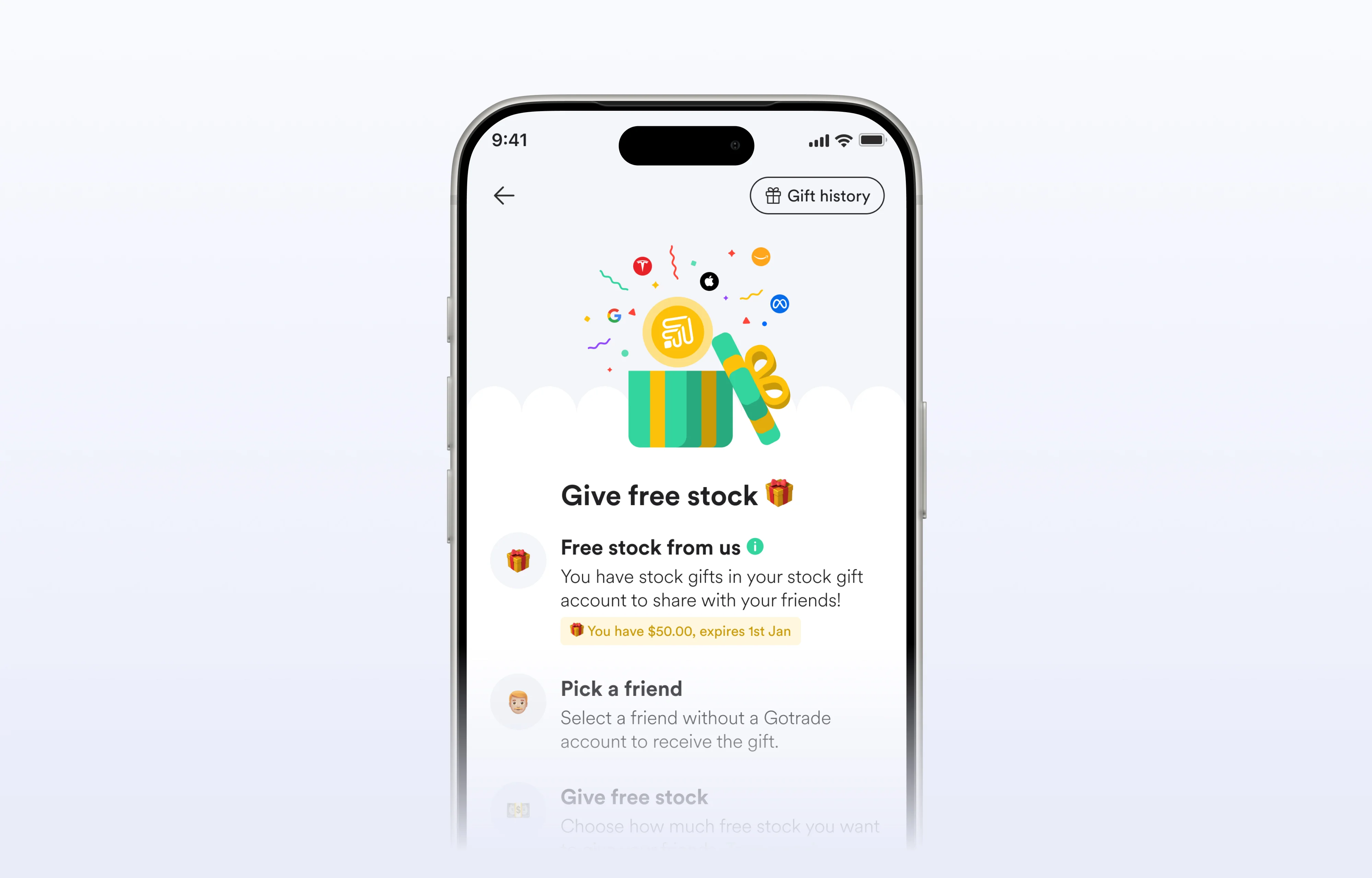
This creates a powerful shift in behavior.
A user with a $1,000 portfolio receives $10 in gifts.
A user with $10,000 receives $100.
This scaling mechanism does two things simultaneously:
It incentivizes high-value users, who are more likely to bring in serious investors.
It naturally prioritizes quality over quantity in referrals.
Rather than treating all users equally, the system amplifies those who contribute the most value.
The 10× Deposit Rule: Designing for Commitment
To unlock the reward, referees must deposit 10 times the value of the gift. This is the system’s most important constraint—and its most intentional friction.
For example:
A $10 gift requires a $100 deposit.
A $20 gift requires a $200 deposit.
This single mechanic filters out low-intent users entirely. It transforms referrals from casual invitations into qualified onboarding pathways. Users who complete this step are no longer just curious; they are invested. And that’s the difference between growth and waste.
Timing as a design lever: the payday effect
One of the most overlooked aspects of UX design is real-world timing. This system leverages a simple but powerful behavioral insight: People are most likely to invest when they have money or are about to receive it.
In Indonesia, salaries typically arrive between the 25th and the end of the month. The system is intentionally structured around this:
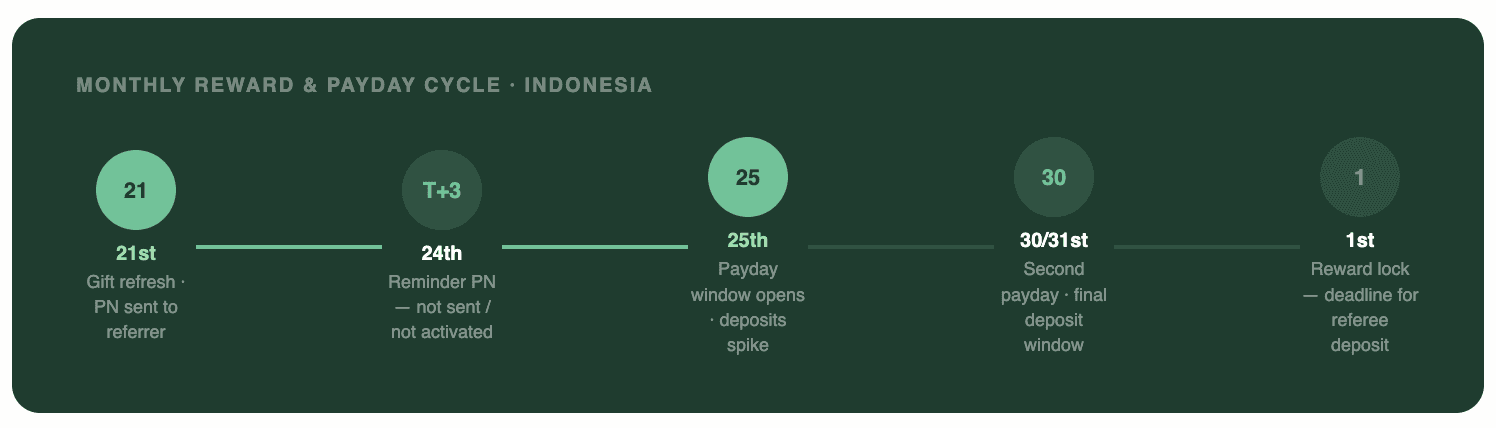
21st 👉 Gift is refreshed.
24th 👉 Reminder notification.
25th – 31st 👉 Payday window (highest deposit likelihood).
1st 👉 Reward deadline.
This creates a natural “activation runway,” aligning product behavior with user liquidity. Instead of pushing users to act at arbitrary times, the system meets them when they are financially ready.
Reducing friction: making referrals effortless
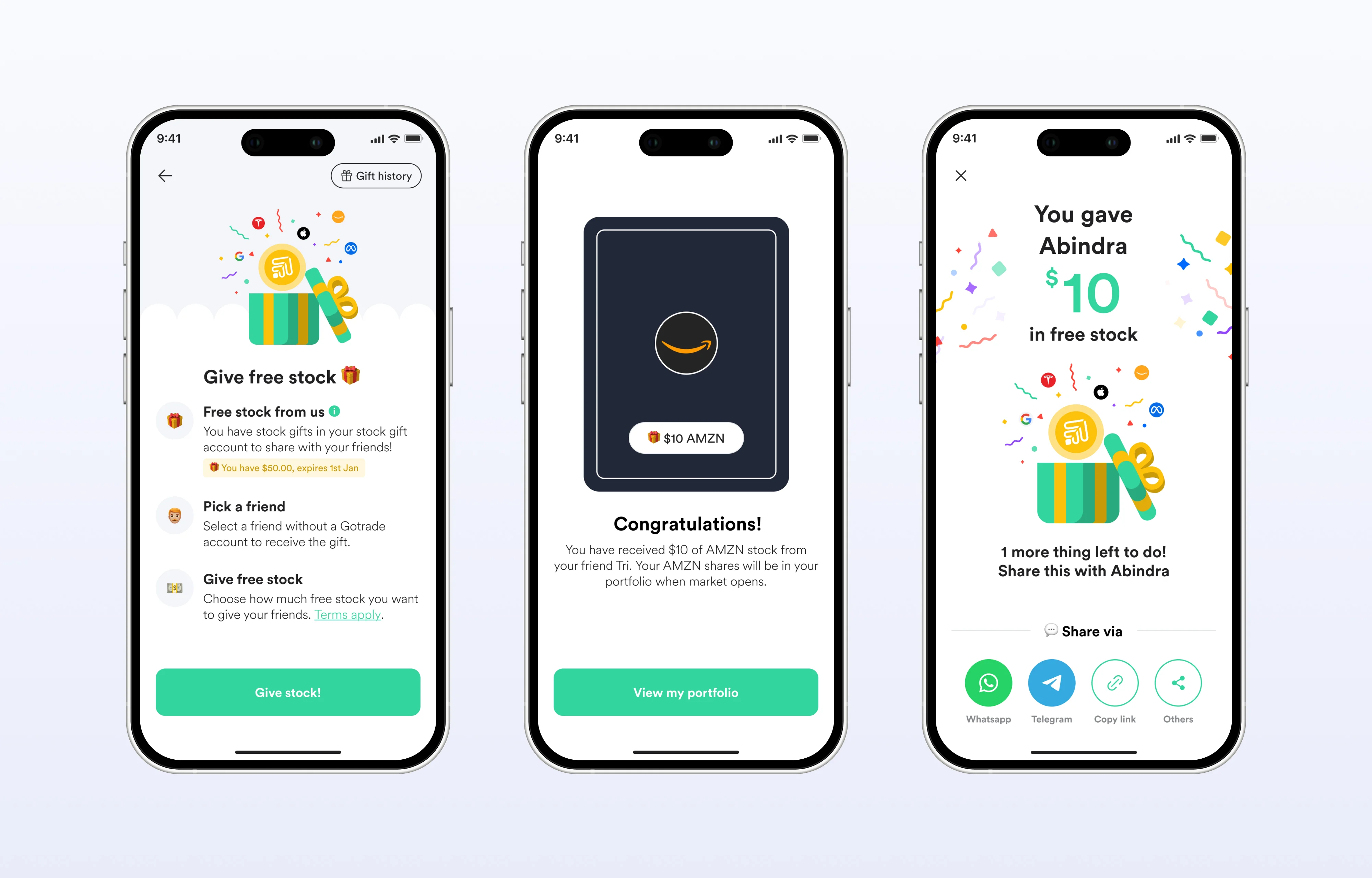
For referrers, the experience is designed to be as seamless as possible.
Users can:
Select contacts directly from their phone.
Allocate gift amounts per person.
Send invitations via native messaging apps.
The message is pre-written, including:
Gift value.
Instructions.
Deadline.
This eliminates cognitive load and reduces drop-off at the most critical moment: sharing. The easier it is to send, the more likely users are to act.
Turning referrals into social signals
Beyond direct sharing, the system introduces a social amplification layer. Users can share their activity publicly:
“I just gave $20 in stocks to my friend.”
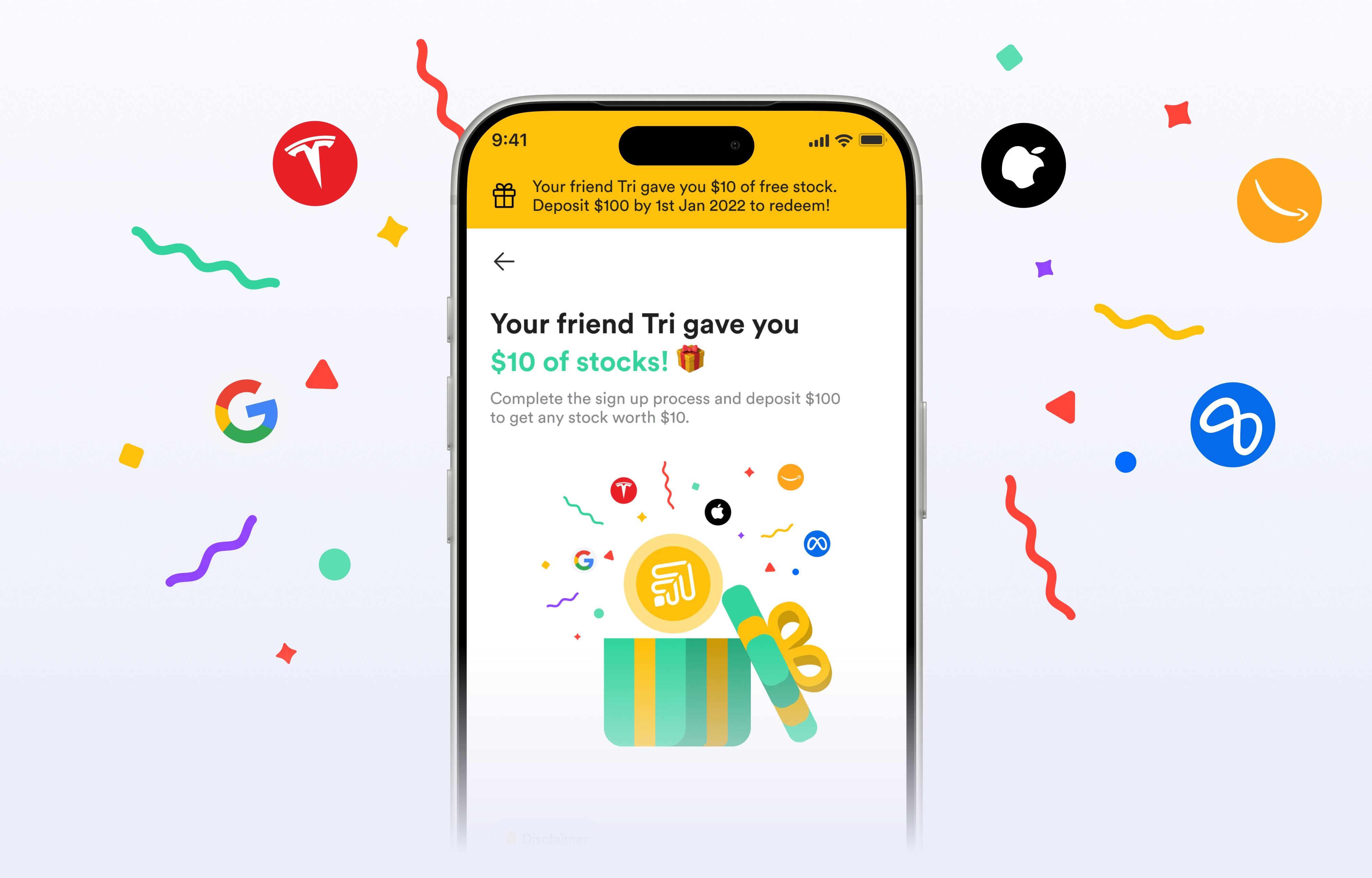
This transforms referrals into something more than a transaction; it becomes a signal of generosity and status. It also unlocks organic growth beyond immediate networks, turning users into distribution channels. Instead of relying on paid acquisition, the product leverages identity and social proof.
Guiding the referee: from curiosity to commitment
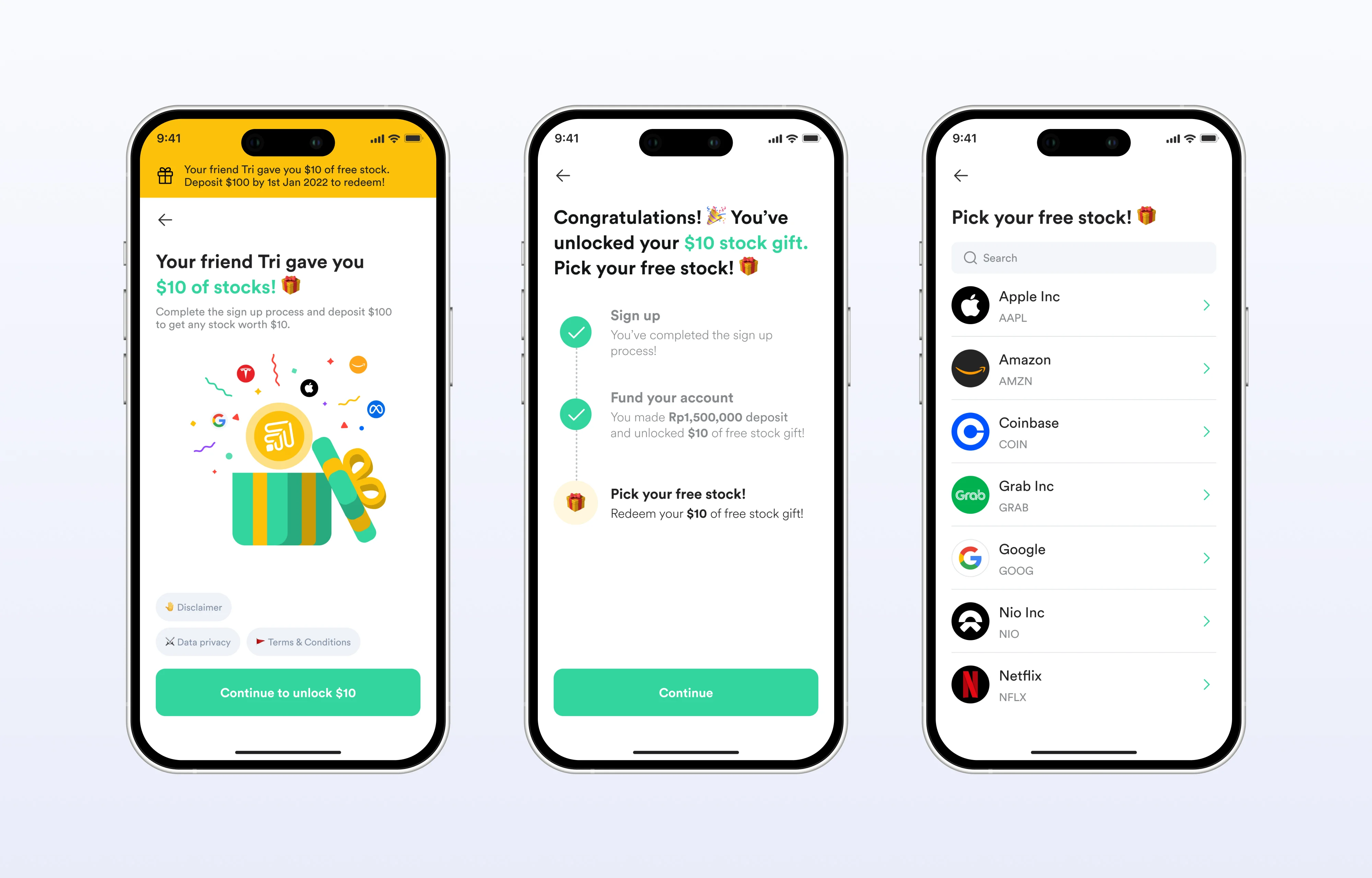
The referee journey is carefully structured to reduce drop-off between sign-up and deposit. Upon entering the app, users are greeted with a personalized message:
“You’ve received a stock gift.”
After completing registration and KYC, they see a clear progress tracker:
Step 1: Sign up (completed).
Step 2: Deposit (required to unlock full reward).
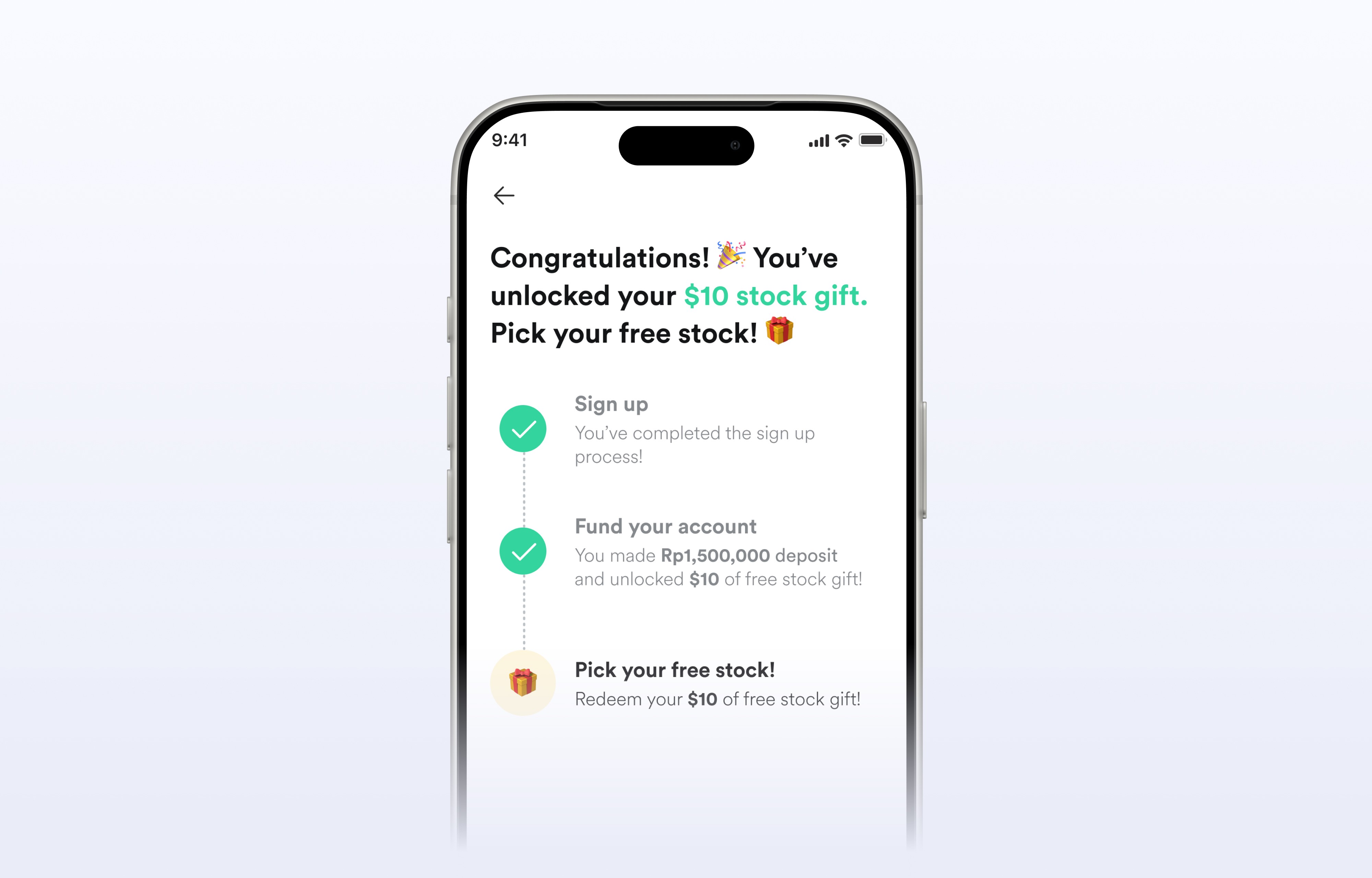
The system doesn’t just tell users to deposit, it shows them exactly how much they need to deposit in local currency. This removes ambiguity and simplifies decision-making.
Even if users skip the deposit initially, the system provides recovery touchpoints, reminding them of the reward when they revisit relevant screens.
Sustaining the system: smart notification design
The referral system doesn’t rely on a single interaction. It is supported by a lifecycle of contextual push notifications:
Gift availability reminders.
Nudges to send referrals.
Activation reminders for referees.
Deadline-driven urgency messages.
Each notification is triggered based on user behavior, not sent blindly. This ensures relevance, reduces fatigue, and keeps the system active over time.
From feature to growth engine
Before this redesign, the referral system functioned as a basic marketing tool:
Rewarding sign-ups.
Generating low-quality users.
Increasing acquisition cost.
After the redesign, it became a self-reinforcing growth engine:
Driving funded accounts.
Encouraging high-value referrals.
Leveraging organic and social distribution.
Reducing CAC through better user quality.
The expected impact reflects this shift:
+20–30%
Increase the referral conversion rate improve
+25–40%
Funded account rate from referred users
↓ Low
Low-quality sign-ups filtered by 10× deposit
↓ CAC
Lower acquisition cost through social & organic
20–30% increase in referral conversion.
25–40% increase in funded accounts.
Significant reduction in low-quality sign-ups.
Lower acquisition cost through organic loops.
Key learnings
This project highlights an important truth about product design in fintech:
The best growth systems reward outcomes, not actions. Rewarding sign-ups is a vanity metric. Rewarding deposits ties every dollar of referral spend to a user who generates real revenue. The constraint that made this system powerful, the 10× deposit unlock, is also what makes it uncomfortable to design. It's intentionally high-friction for the referee. That friction is the point.
Behavioral timing is a design resource. The payday window isn't a nice-to-have; it's a core system mechanic. Ignoring when users have liquidity means fighting human psychology instead of working with it. Good growth design maps to real-world financial rhythms, not app-centric ones.
Designing for two users simultaneously requires two separate empathy maps. The referrer and referee have completely different motivations, different knowledge of the product, and different friction points. Treating them as one user and building one generic "referral flow" is why most referral programs fail to convert. Each journey needed to be designed independently, then stitched together at the right moment.
Push notifications are part of the UX, not an afterthought. Designing the notification lifecycle alongside the core flows ensures every message is intentional, contextual, and tied to a specific behavioral gap. When notifications are mistimed or sent to users who’ve already completed the action, they don’t just underperform, they erode trust
Growth thinking is a design skill, not just a PM skill. Understanding CAC, activation rates, and funded user economics shaped every UX decision in this project. A designer who can frame their work in business outcomes, not just usability, earns a seat at the strategy table. This project is proof that growth systems are design problems.
Referrals shouldn’t reward sign-ups. They should reward shared investment.

Tri Kurniawan
Product Designer